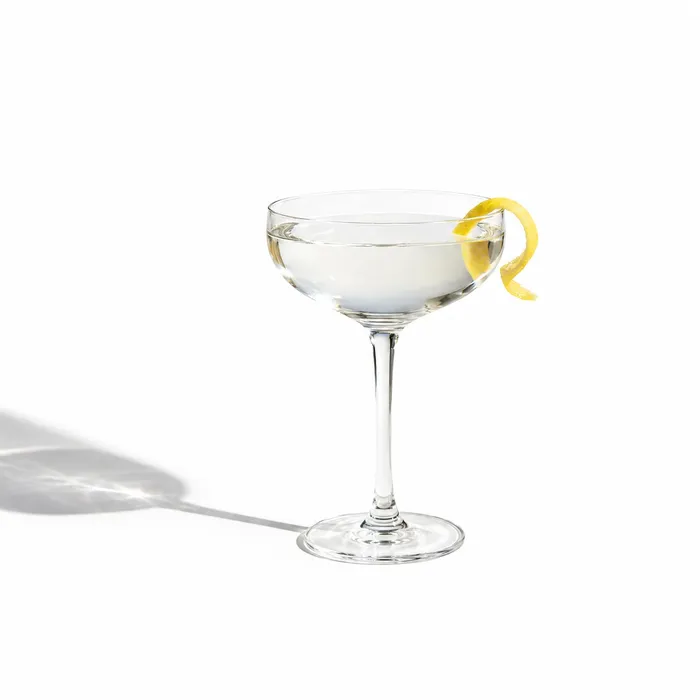
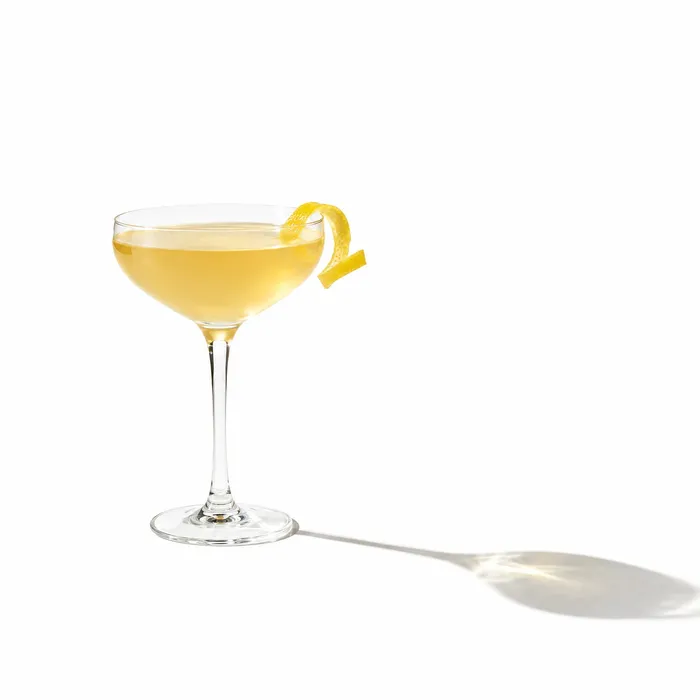
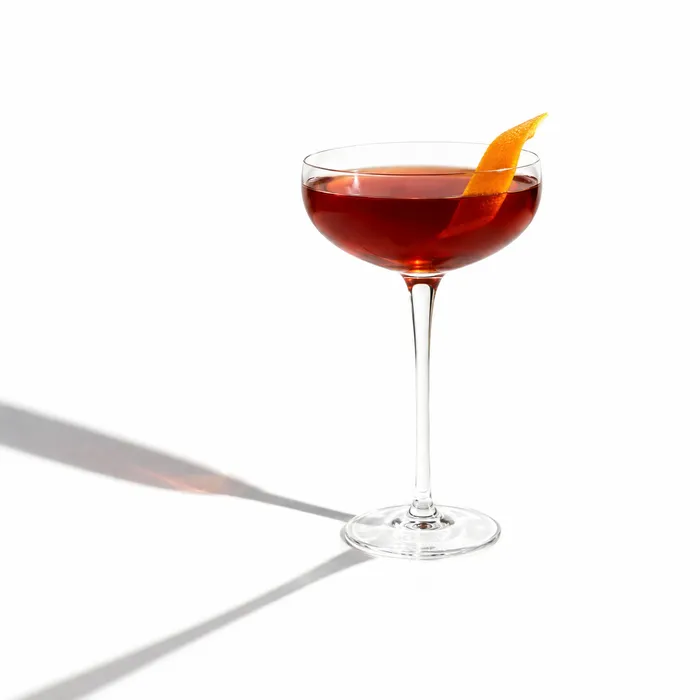
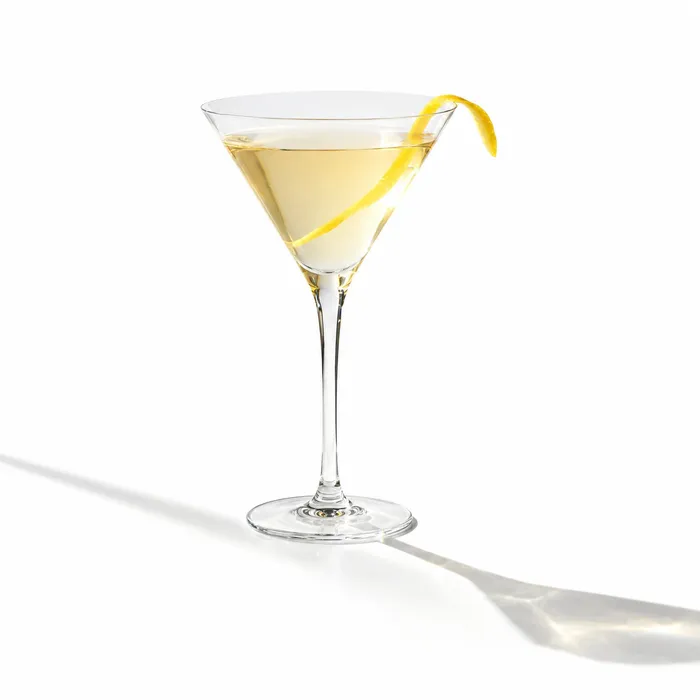
50/50 Martini(フィフティ・フィフティ・マティーニ)
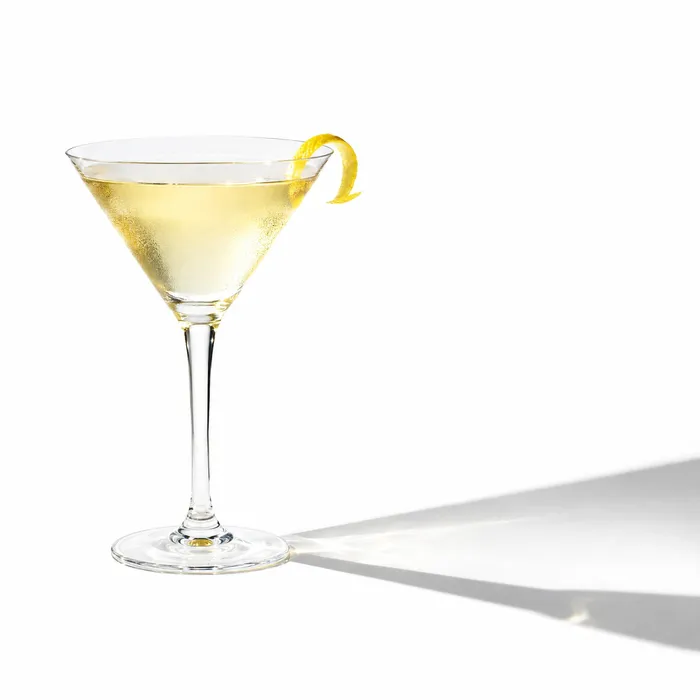
Equal parts gin and vermouth — the Martini before it went to extremes.
01Recipe
Recommended recipe
House spec — an editorial spec drawing on the sourced versions below.
| Ingredient | Measure |
|---|---|
| Gin | 30 ml |
| Dry vermouth | 30 ml |
Total volume (pre-dilution)
1 : 1
- 01
Add gin and vermouth to a mixing glass filled with ice.
- 02
Stir until well chilled.
- 03
Strain into a chilled coupe. Garnish.
Garnish — Lemon twist · or olive
02Taste profile
- Sweetness
- 35Light
- Sourness*
- 0Faint
- Bitterness
- 42Moderate
- Fruitiness
- 38Light
- Herbal*
- 18Faint
- Alcohol
- 55Moderate
- Crisp
- 58Moderate
Independent editorial scores, 0–100. *Estimated from the ingredient list — a profile sketch, not a verdict.
03History
This is not a riff but archaeology: the 19th-century Martini was routinely equal parts. Harry Johnson's 1888 recipe is already 1:1, and pre-Prohibition specs only drifted slowly drier.
The 20th century made 'dry' a status symbol — 3:1, 8:1, atomizer jokes — and the equal-parts drink survived mostly in bar manuals and the memories of people who liked their vermouth.
The craft revival restored it: the 50:50 is now the standard answer to 'I want a Martini I can actually taste', and the bartender's off-duty classic.
Origin contested — the entry keeps verified record and received legend distinct.
Sources — Harry Johnson (1888) · Simonson, The Martini Book (2020)
04Recipe versions
Each version is shown exactly as recorded in its source — unverified claims are flagged.
- Harry Johnson's Bartender's Manual
Harry Johnson's Bartender's Manual
Harry Johnson · 1888 · Book · unverified
- Old Tom gin and vermouth1 part
Stir, strain.
The equal-parts Martini was the rule, not the exception.
Pick 2 versions to compare — up to 3 on a wider screen
05Variations
06The map
Ingredients
Spirits